
 Español




Start: San Cristobal airport, Galapagos Islands (SCY)
Finish: Baltra airport, Galapagos Islands (GPS)
Physical rating: Moderate
Style: First Class
Ages: Min 12
Group size: Min 1 – Max 16
Day 1 Saturday: San Cristobal, Interpretation Center
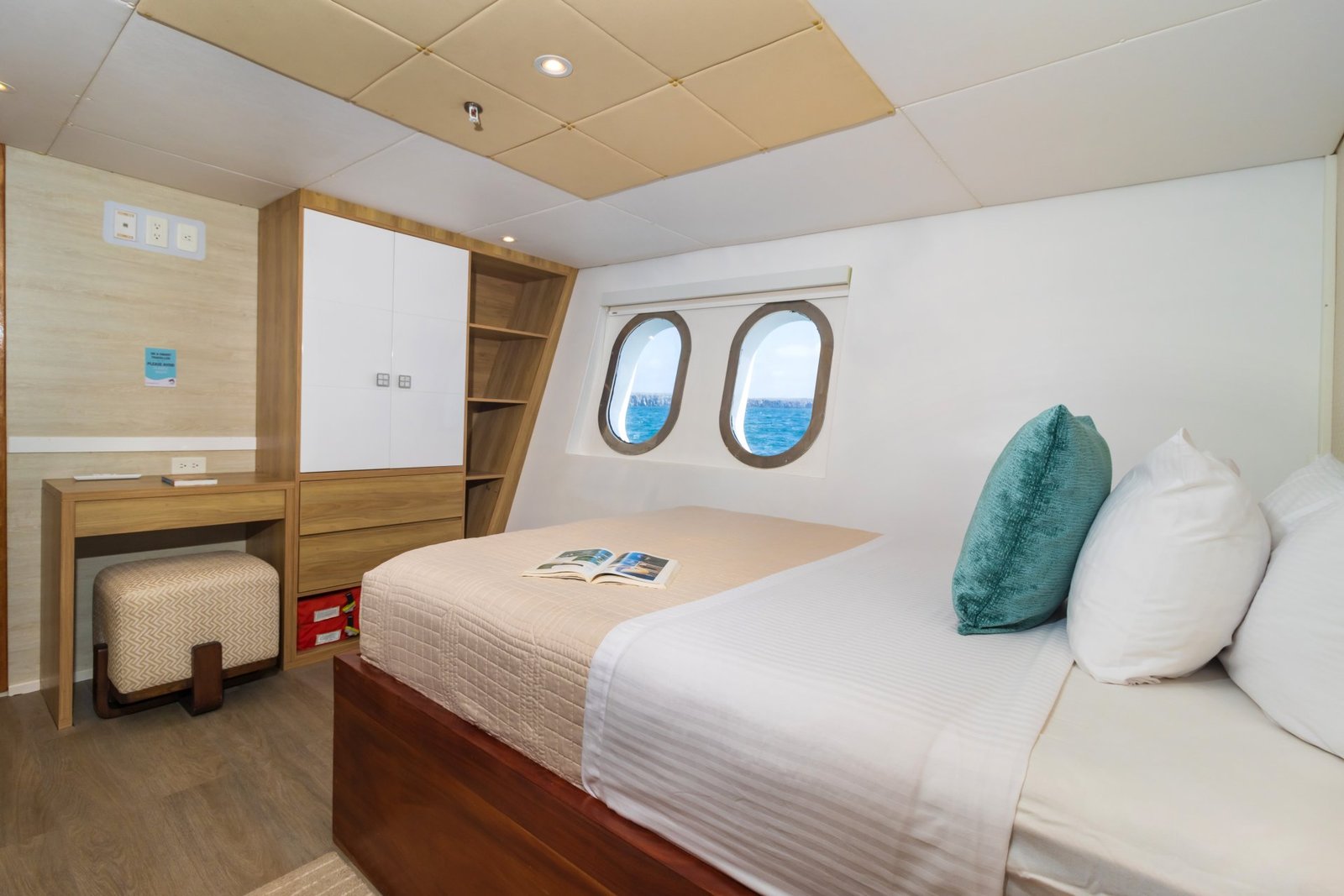
On arrival in the Galapagos, meet your local naturalist guide in the arrival hall and transfer to the Grande Daphne. Climb aboard and settle into your assigned cabin, meet the crew and listen to a safety drill. With the formalities out of the way, sit down to lunch and get to know your shipmates a little better.
The first stop today is the San Cristobal Interpretation Center. The centre brings the history and geography of the archipelago to life, from its volcanic origins to the present day. Get a complete overview of the Galapagos, the perfect way to start your adventure.
Accommodation
M/Y Grand Daphne (1 night)
Meals
Lunch
Dinner
Included activities
Isla San Cristobal – Interpretation Center Visit (1 hour) – Dry Landing
Day 2 Sunday: Santa Fe Island & South Plazas Island
Take a walk on Isla Santa Fe, home to a collection of the most spectacular wildlife in the Galapagos. You can expect to see sea lions, Galapagos hawks, land iguanas, a variety of finches, Galapagos mockingbirds, marine turtles, frigatebirds, Galapagos doves and lava lizards. Phew. The approximately 1.5-hour hike takes you along the coast and through a forest of opuntia (prickly pear cacti). The trail can be a little rocky, so mind your step and wear solid walking shoes. Later enjoy a snorkel in deep water and look out for schools of fish, rays and sea turtles.
Afterwards, continue to Isla Plaza Sur, a small, picturesque island. Take a walk (approximately 1.5 hours), getting close to sea lions and passing one of the Galapagos’ largest land iguana populations which rest among cacti. The southern cliffs of Plaza Sur are great for spotting tropicbirds and swallow-tailed gulls, as well as ‘the Gentlemen’s Club’ – a gathering of male sea lions. Today there may be an extra stop along the way to Plaza Sur to restock the provisions for the boat. Later tonight, set sail for Isla Genovesa.
Accommodation
M/Y Grand Daphne (1 night)
Meals
Breakfast
Lunch
Dinner
Included activities
Isla Plaza Sur – Walk (2 hours) – Dry Landing
Isla Santa Fe – Walk (1.5 hours) – Wet Landing
Isla Santa Fe – Snorkel (1 hour)
Day 3 Monday: Genovesa
After an overnight sail, reach Isla Genovesa, the archipelago’s north-eastern outpost. It’s undeniably worth the voyage. Dolphins are often spotted in the waters here, so keep your eyes peeled. These varied landscapes are a twitcher’s paradise, with all three kinds of boobies, including the rare red-footed booby, making their home here. Next up is Bahia Darwin (Darwin Beach), another superb site with large breeding colonies of seabirds and frigates and other birds such as lava herons, swallow-tailed gulls, mockingbirds and, hopefully, vampire finches.
Enjoy a moderate walk (approximately 2.5 hours) that passes tide pools, sea lions and diamond stingrays. This walk involves sand and some rocky sections. The steep Prince Philip’s Steps lead you to the heart of the seabird rookeries, with birds overhead and nesting among the cliffs. Look out for storm petrels on the island’s rocky plains; Genovesa is the only place in the world where these birds can be seen flying during the day. Afterwards, perhaps cool off with a snorkel. The island’s magnificent marine life makes for spectacular snorkelling – you might encounter manta rays, sharks, turtles and moray eels, plus many species of fish.
Later tonight, depart Isla Genovesa for Isla Santiago.
Accommodation
M/Y Grand Daphne (1 night)
Meals
Breakfast
Lunch
Dinner
Included activities
Isla Genovesa – Bahia Darwin – Walk (2 hours) Wet Landing
Isla Genovesa – La Barranco – Snorkel (1 hour)
Day 4 Tuesday: Santiago Island & Santa Cruz
On Santiago Island’s eastern coast sits Bahia Sullivan. Take a walk along pahoehoe lava (approximately 1 hour), which was created by an eruption that occurred here in 1897. With some luck you might see some marine iguanas, Sally Lightfoot crabs, sea lions, finches, turtles, sharks and penguins. During your walk, as always, your naturalist guide will take you through the geological history of the island.
Travel to Cerro Dragon (Dragon Hill): one of the best places to see land iguanas in the islands. From our dry landing, walk to a brackish, lagoon spotting lagoon birds such as stilts, pintail ducks, sandpipers, sanderlings and flamingos. Further inland, the trail offers a beautiful view of the bay and the western area of the archipelago. This area is a nesting site for land iguanas, which is constantly monitored and assisted by the Charles Darwin Research Station. The arid-zone vegetation makes for an ideal place to see Darwin’s finches, Galapagos mockingbirds, the endemic Galapagos flycatcher and yellow warblers. The path can be challenging but it will be worth it for a spectacular view of the bay.
Accommodation
M/Y Grand Daphne (1 night)
Meals
Breakfast
Lunch
Dinner
Included activities
Isla Santiago – Sullivan Bay – Walk (1.5 hours) – Dry Landing
Santa Cruz – Bahia Borrero – Walk (1 hour)
Santa Cruz – Bahia Borrero – Snorkel 45minutes – Wet Landing
Isla Santiago – Sullivan Bay – Snorkelling (45 mins)
Isla Santa Cruz – Cerro Dragon – Walk (1.5 hours) – Dry Landing
Isla Santa Cruz – Cerro Dragon – Snorkelling or swimming (1 hour)
Day 5 Wednesday: Black Turtle Cove & Baltra airport
Brave an early start to explore Caleta Tortuga Negra (Black Turtle Cove) on a Zodiac ride. This red mangrove wetland is located on the north shore of Isla Santa Cruz. A breeding area for green turtles, this is a good place to catch sight of them mating. There is also abundant bird life, such as the yellow warbler and lava heron. It is also a nursery for golden cow-nose rays, eagle rays and Galapagos sharks. This is your final excursion before you head to the airport in Isla Baltra for your flight back to Quito or Guayaquil.
Meals
Breakfast
Included activities
Isla Santa Cruz – Black Turtle Cove – Panga ride (1.5 hours)
Special Information
As you will be visiting the highlands of Santa Cruz immediately on arrival, we recommend that you wear comfortable, closed-in shoes and clothes suitable for walking. The trails can be muddy. There will be an opportunity to swap into rubber boots at a ranch before beginning the walk. From January to April, it can rain heavily in the highlands, so a rain jacket is also recommended.
Please note that the snack provided during your flight may not meet specialty dietary requirements.