
 Español

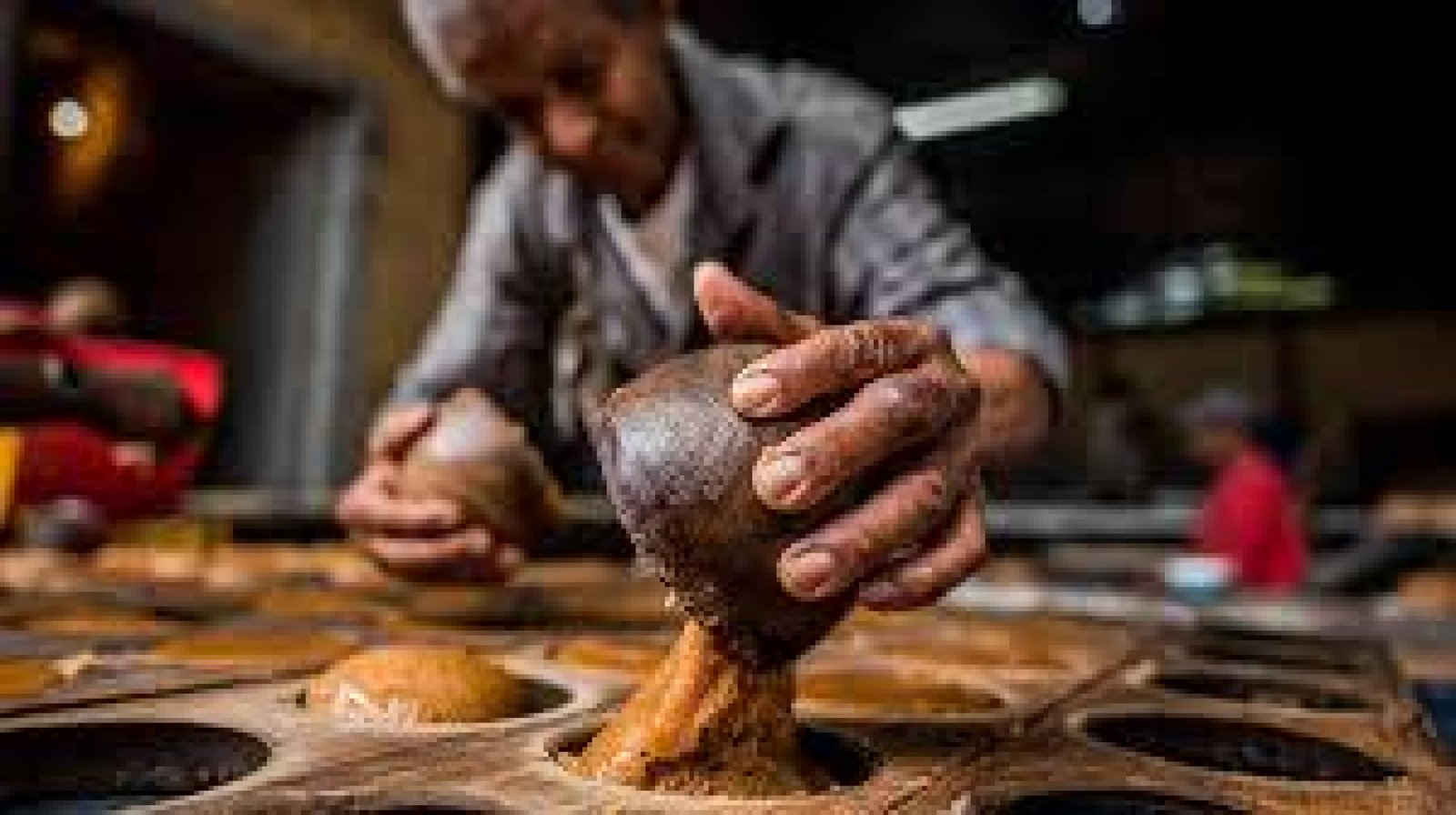
Where sugarcane is transformed with fire, time, and patience
In rural areas of the Ecuadorian Andes, especially in communities of the province of Cañar, traditional panela sugar mills continue to operate much as they have for generations. These are not factories, but family-run spaces where sugarcane is slowly transformed into panela through manual processes and inherited knowledge.
The sound of the mill, the steam rising from boiling juice, and the sweet aroma in the air are all part of daily rural life.
An artisanal process step by step
Panela production begins with harvesting sugarcane, which is then crushed in simple mills powered by human effort, animals, or small engines. The extracted juice is cooked in large metal pans over direct fire and stirred constantly until it reaches the right consistency.
The thick liquid is poured into wooden or metal molds, where it cools and solidifies naturally—without additives or industrial processing.
This artisanal method produces a rich-flavored sugar deeply connected to its territory.
Family work and the transmission of knowledge
In traditional sugar mills, every family member has a role. While some operate the mill, others tend the fire or prepare the molds. Children grow up watching, learning, and absorbing the craft as part of everyday life.
Knowledge is passed on through practice rather than formal instruction, keeping the tradition alive.
Panela as food and local economy
Panela is not only a commercial product; it is a staple in rural diets and is used to prepare hot drinks, desserts, and traditional remedies.
Its sale in local markets provides an essential source of income for farming families, strengthening small-scale economies and short supply chains.
Rural tourism through real experiences
Visiting an active panela sugar mill offers an authentic cultural experience. These are not staged attractions, but real working environments. For conscious travelers, observing this process provides insight into manual labor, traditional food systems, and rural resilience.
This form of rural tourism is based on respect, observation, and learning.
A tradition that resists time
Despite competition from industrial sugar, traditional panela sugar mills remain symbols of cultural resistance and rural self-sufficiency. Their continued existence proves that alternative ways of producing and living still thrive in the Andean regions of Ecuador.
Discovering panela mills means discovering a slower Ecuador—one shaped by fire, land, and human hands.