
 Español

Manabí: where the coastal forest becomes art
In several rural communities of the province of Manabí, tagua has been part of everyday life for generations. Known as “vegetable ivory,” this hard white seed comes from a native palm and has historically been used to create buttons, figurines, and decorative objects without extracting animal ivory.
Tagua craftsmanship represents a balanced relationship between nature, manual labor, and local economies.
From forest to artisan workshop
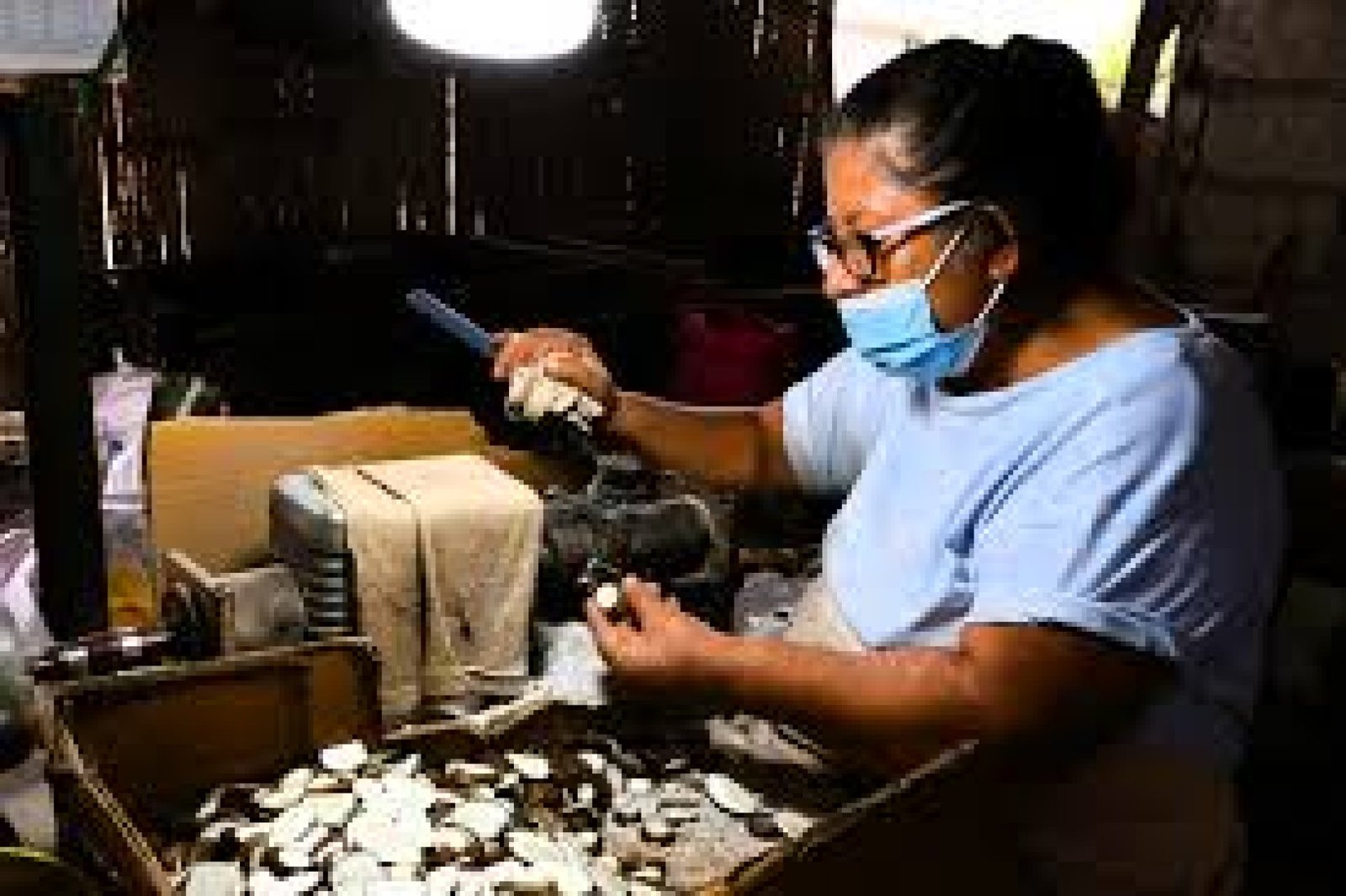
The tagua process begins in the forest. Seeds are collected by hand, dried for several weeks, and then carefully worked in small family workshops. Each piece goes through multiple stages: cutting, carving, polishing, and sometimes natural dyeing.
This slow process ensures that every object is unique, with no two pieces ever being exactly the same.
A craft passed down through generations
Knowledge of how to work with tagua is not learned in formal schools. It is passed down within families, through observation and practice from an early age. Parents and grandparents teach how to identify the right seed, use tools properly, and respect the material’s natural timing.
This everyday learning keeps a craft alive that has resisted industrialization.
Sustainable craftsmanship and local economy
Tagua is a renewable and biodegradable material. Its use promotes a sustainable alternative to synthetic materials or products of animal origin. In addition, artisanal production generates income for rural communities without the need for large-scale infrastructure.
Purchasing tagua crafts directly supports local artisans and a fairer economic model.
Cultural tourism and appreciation of handmade work
Visiting tagua workshops allows travelers to understand the true value of Ecuadorian craftsmanship. It is not just about acquiring an object, but about learning its story, its process, and the people behind each piece.
This type of cultural tourism encourages respect for traditional trades and conscious production.
Tagua as a symbol of coastal identity
Beyond its commercial value, tagua represents identity, patience, and creativity. It is an example of how natural resources can be used responsibly while keeping traditions alive and strengthening communities.
Discovering tagua craftsmanship is discovering an essential part of coastal Ecuador, told through hands, seeds, and time.