
 Español

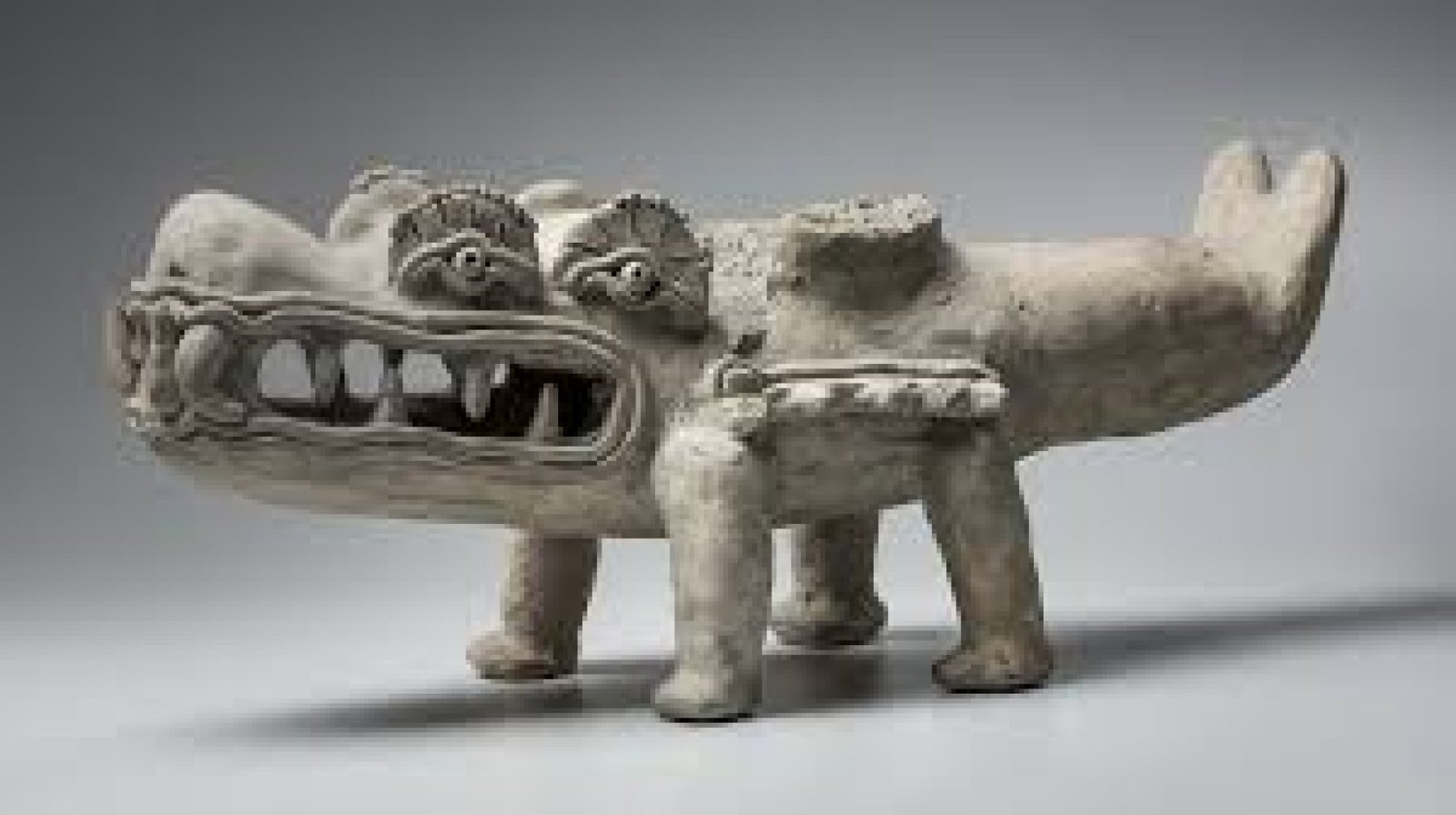
La Tolita Pottery: Ancestral Art from Northern Ecuador
The La Tolita culture, which thrived between 600 BCE and 400 CE in the northern coastal region of Ecuador (in present-day Esmeraldas and parts of Manabí), is renowned for its remarkable ceramic production—some of the most sophisticated in pre-Columbian America.
Style and Symbolism
La Tolita ceramics are known for their realism and fine detail. Human, animal, and hybrid figures were shaped in clay, revealing facial expressions, tattoos, headdresses, and ornaments that convey social hierarchy, rituals, and spiritual beliefs.
Masks and Ritual Figures
Among the most iconic pieces are funerary masks, ceremonial whistles, and figurines with cranial deformations—believed to represent mythical characters or priests. These items played important roles in rituals and spiritual practices.
Archaeological Legacy
Today, many of these ceramic artifacts are preserved in national and international museums. Their study provides insight into ancient trade networks, artistic traditions, and the social structure of pre-Hispanic Ecuador.