
 Español

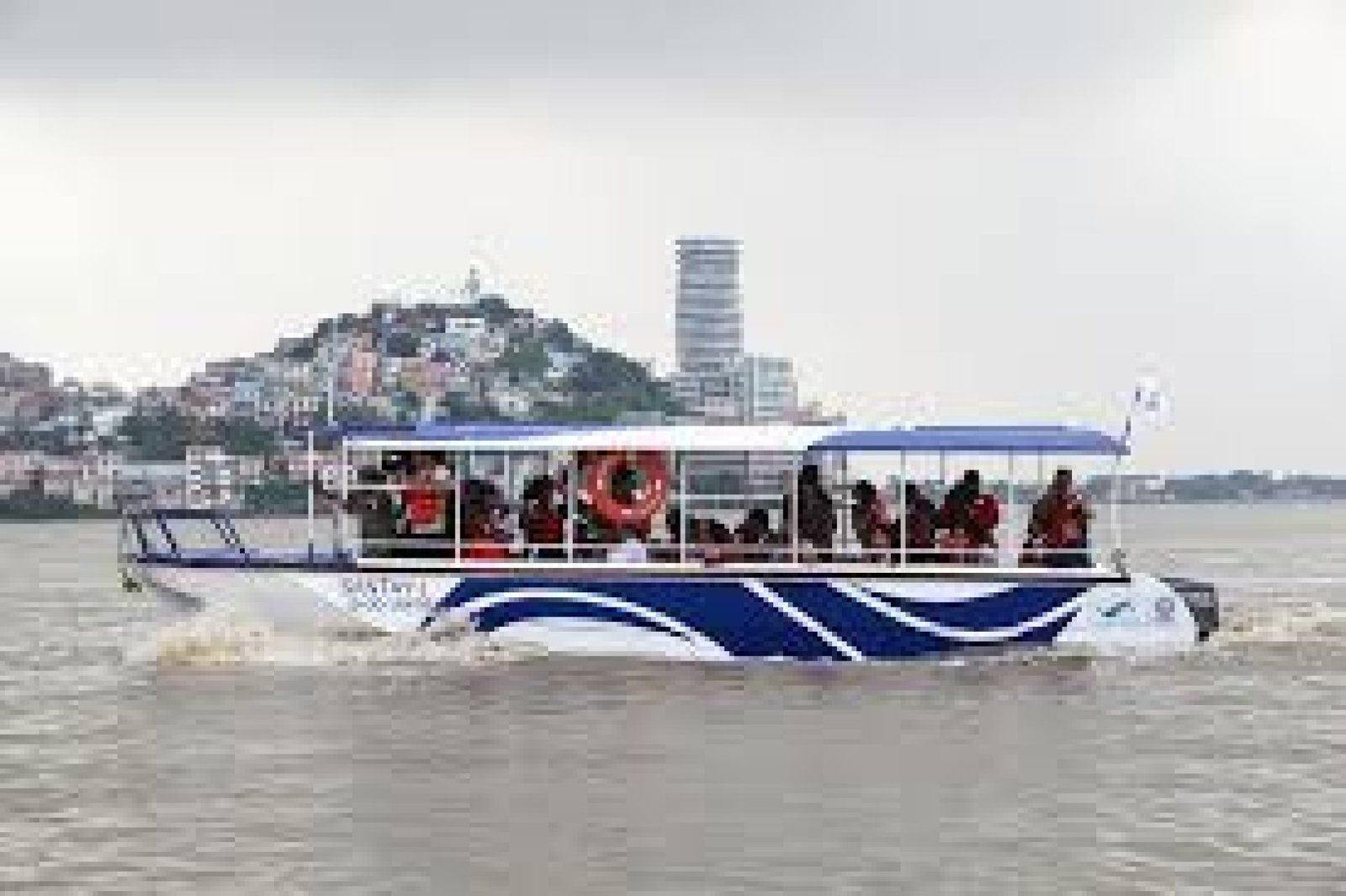
When the river becomes the road
Across large areas of Ecuador’s coastal interior, rivers continue to function as primary transportation routes. In the lower basin of the Guayas River, particularly in rural zones of the province of Guayas, river ferries play a vital role by carrying people, vehicles, agricultural goods, and livestock from one riverbank to the other.
For local residents, crossing the river is not a tourist experience—it is part of daily life.
Simple vessels with an essential role
River ferries are usually wide, sturdy barges designed to handle changing currents and fluctuating water levels. They operate with basic engines and are run by operators who understand tides, river behavior, and the safest times to cross.
There is no luxury or complex design—only practicality and experience.
Local economies in motion
Each crossing moves more than passengers. Sacks of rice, banana crates, motorcycles, farm tools, and small livestock are part of the everyday scene. The ferry allows products to reach nearby markets and enables rural communities to access services.
Without this river-based system, many local economies would remain isolated.
A riverside profession built on responsibility
Ferry operators carry significant responsibility. They know their passengers, watch weather changes closely, and make quick decisions when the river rises or currents become dangerous.
Their work is rarely visible, yet essential for safety and continuity.
A social space shaped by waiting
While waiting to cross, people talk, exchange news, and observe the flow of the river. The ferry becomes a meeting point where routines, stories, and lives intersect.
This shared waiting time is part of a rhythm defined by water, not by schedules.
Traditional mobility in a modern country
Despite the expansion of roads and bridges, many river ferries remain active because they adapt better to fluvial environments. They represent practical, low-cost, and culturally integrated infrastructure.
Rather than relics of the past, they demonstrate how traditional systems remain relevant today.
An Ecuador that moves with the river
River ferries reveal a lesser-known Ecuador, where mobility depends on water knowledge and community cooperation. Understanding these systems offers insight into a country shaped by rivers and everyday resilience.
This is an Ecuador that moves at the pace of the river—not the clock.