
 Español

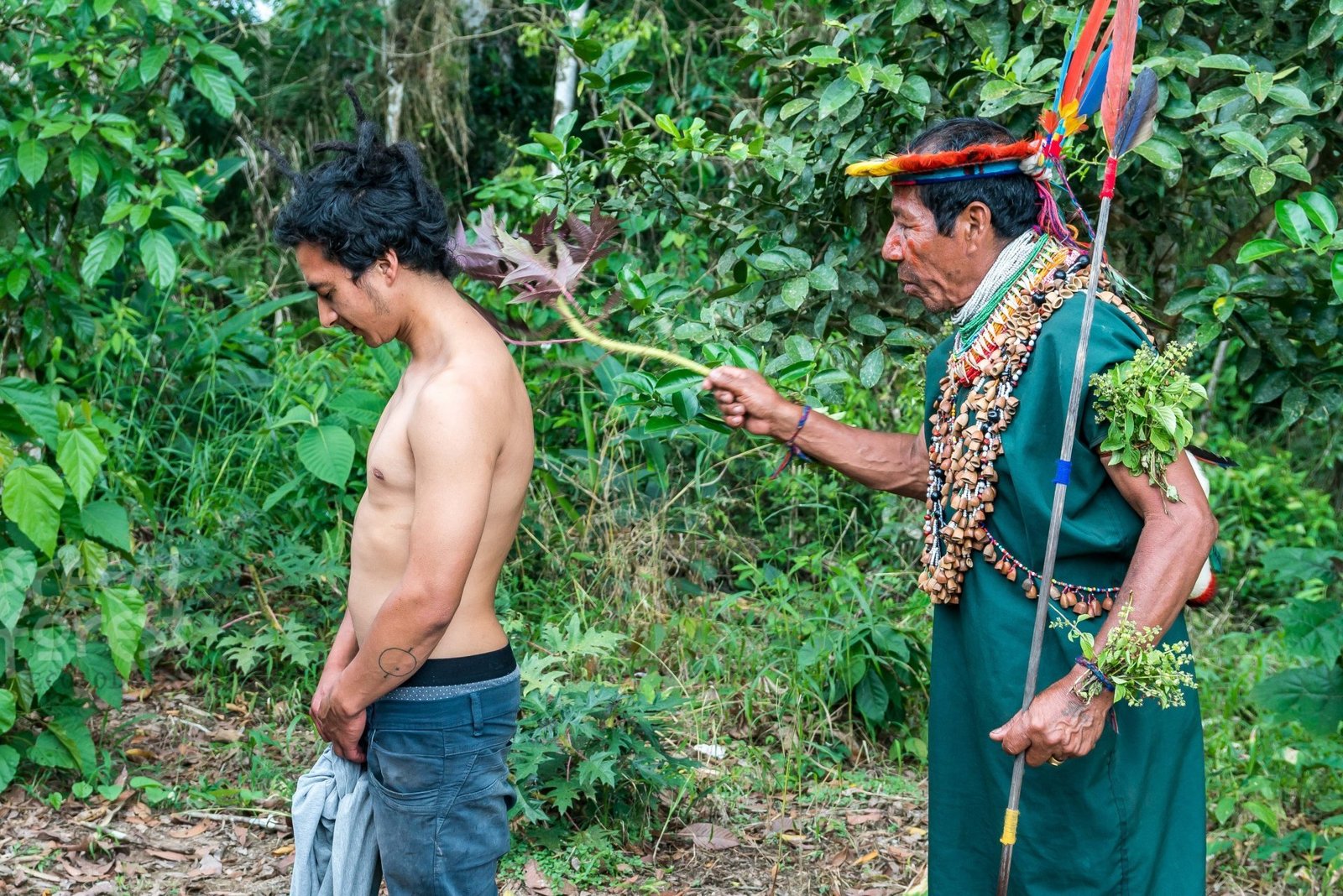
Towns and nationalities of the Coast
If you decide to visit the Ecuadorian Coast, you will be able to observe the towns:
- awa
- Chachi.
- Wait.
- Tsa'chila.
- Huancavilca blanket.
Towns and nationalities of the Sierra
Instead, when visiting the Sierra, you will observe nationalities such as:
- Karanki.
- Natagrandma.
- Otavalo.
- Kayambi.
- Kitu Kara.
- Panzaleo.
- Chibuleo.
- Kichwa from Tungurahua.
- Salasaka.
- Puruha.
- Waranka.
- Saraguro.
Towns and nationalities of the Amazon
Finally, when you visit the Ecuadorian Amazon, you will see:
- A'l Cofan.
- Redwood Siona.
- Huaorani.
- Shiwiar.
- Zapara.
- Achuar.
- Shuar.
- Kichwa from the Amazon
Location of the towns
Awa
The territory that includes this town is Esmeraldas, Carchi and Imbabura
Chachi.
It lives in the jungle northwest region of Ecuador (province of Esmeraldas)
Wait.
They inhabit the Pacific coast of Ecuador.
Tsa'chila.
The town is located in the province of Santo Domingo de los Tsachila, Santo Domingo canton
Karanki.
According to the data, it is located in the province of Imbabura, in the parishes of San Antonio, Karanki, Angochahua and La Esperanza (within the Ibarra canton); in the Otavalo canton in the San Juan de Ilumán parish and in the Mariano Acosta and San Francisco de Sigsipamba parishes of the Pimampiro canton.
Natagrandma.
The town is located in the province of Imbabura, Antonio Ante canton: Andrade Marín, San Francisco de Natabuela, San José de Chaltura parishes, and in the Ibarra canton, San Antonio parish.
Otavalo.
Ancestrally, they are found in the northern highlands of Ecuador, in what is now the Otavalo Canton, province of Imbabura, their population sits at the foot of the Imbabura volcano.
Kayambi.
It is located in the north of the province of Pichincha and south of the province of Imbabura.
Kitu Kara.
It is located in the Pichincha province (Mejía and Rumiñahui cantons) and in the Quito metropolitan district.
Panzaleo.
They are settled in the southern part of the Cotopaxi province.
Chibuleo.
Chibuleo is in the central highlands, to the South-West of the Tungurahua province, in the Ambato canton, Juan Benigno Vela parish.
Salasaka.
They are in the province of Tungurahua in central Ecuador, halfway between Ambato and Baños.
Puruha.
You can find them in the province of Chimborazo.
Waranka.
They are living mainly in the Andean and rural area of the central province of Bolívar, in the Ecuadorian highlands.
Saraguro.
The Saraguro people are located in the provinces of Loja and Zamora Chinchipe in southern Ecuador.
A'l Cofan.
It is the first group in the list that is located in the Amazon. It is located on the border between Colombia and Ecuador.
Redwood
• In Ecuador they live mainly in the province of Sucumbíos, Shushufindi canton, San Roque parish and in the Cuyabeno canton, Tarapoa parish, on the banks of the Aguarico River.
Siona
The population found in Ecuador is in the Province of Sucumbíos, Putumayo canton, Puerto Bolívar parish; and in the Shushufindi canton, San Roque Parish.
Huaorani.
They are located in these three provinces, all the Amazon:
Province of Orellana, in the Orellana canton, in the Dayuma parish; and in the Aguarico canton, in the Tiputini and Yasuní Sta. María de Huiririma parishes.
Province of Pastaza in the Arajuno canton and in the Curaray parish.
Napo province in the Tena canton and the Chontapunta parish
Shiwiar.
In the case of this country, they can be found at:
Southeast of the province of Pastaza in the Pastaza canton and in the Corrientes river parish.
Zapara.
The 10 communities that are part of this group are scattered in: the Río Tigre parish: Cuyacocha, Conambo, Pindoyacu, Balsaura, Wiririma, Torimbo, Shiona; in the Sarayacu parish: Jandiayacu, Llanchama Cocha, Mazaramu.
Achuar.
We can see the Achuar in the Province of Pastaza and Morona Santiago. Whose center is the city of Puyo.
Shuar.
This penultimate group is in greater numbers in the provinces of Morona Santiago, Zamora Chinchipe and in smaller numbers in the provinces of Napo, Orellana, Sucumbíos and Guayas.
Kichwa from the Amazon
They are located in the northwestern part of the Ecuadorian Amazon region, the upper area of the Province of Napo, Sucumbíos is where they are settled.
The languages of these peoples are:
A'INGAE:
This language belongs to the people, A'i (Cofán) located on the Aguarico and San Miguel rivers in the province: "Sucumbíos". The communities where the A'ingae-speaking population lives are: Dureno, Duvuno, Sinangüe, Benejo, Sábalo. Chandia Na'en. Approximately 650 people speak this language.
AWAPIT
Traditionally known as Coaiquer, it is spoken by the Awá population.
The people who speak this language in Ecuador are 3,500 speakers located in Carchi, Esmeraldas and Imbabura.
CHA'PALAA.
It is the language of the Chachi people, known by some historians as Cayapas. The number of people is between eight thousand.
EPERA PEDEDE.
This language belongs to the êpera (Embera) people, a small group in Ecuador. In Ecuador, speakers of the language can be found in the Esmeraldeña province, in front of the Bourbon population at the intersection of the Santiago River with the Cayapas. About sixty people speak the mentioned language.
KAYAPI.
The language spoken by this town that is located in Curaray in the north of the province of Pastaza and in Balsaura to the northeast of Pastaza is known as Záparo. This language is spoken by very few people, as there are few representatives of this culture left along the Curaray River.
PAICOCA.
It is the language of the Secoya and Siona peoples, two dialects belonging to the same language. The number of Sequoia-speakers is 250 speakers and the range of 200 to 250 people is that of Siona. They are located in the Aguarico and Cuyabeno rivers in the province of Sucumbíos. The Siona centers are Piaña and Puerto Bolívar. The Secoya centers are San Pablo de Cantetsiaya and Secoya (Sewaya).
QUICHUA OR RUNA SHIMI.
The Quichua-speaking peoples are located in the provinces of Loja, Imbabura, Pichincha, Napo, Bolívar, Cotopaxi, Tungurahua, Chimborazo, Cañar, Azuay, Sucumbíos, Pastaza and Zamora Chinchipe and Orellana. If we go outside of Ecuador, the Quichua-speaking peoples extend to Peru, Bolivia, Argentina, Colombia, Brazil, Chile and possibly also Paraguay. It is estimated eight million speakers of this language.
SHUAR-ACHUAR CHICHAM.
Also called Jívara language. There are 80 thousand inhabitants who speak it. Its location in the country is Zamora Chinchipe, Morona Santiago, Pastaza, Napo, Sucumbíos and provinces of the Coast. In Cuyabeno whose tour you can find by clicking here, this language is spoken in the Charip and Taikua centers whose population is approximately two thousand people. Uniting in this type of center allows language and culture to be maintained by being able to fight together for a bilingual education, among many other things.
The Shuar today is found in the province of Pichincha-Quito. Instead, the Achuar dialect is spoken in the provinces of Morona Santiago and Pastaza. There is an important lexical variation between the Shuar dialects and the Achuar dialect. There is also another subdialect, in the province of Pastaza, known as Shiwiar. Due to these variations, there is a greater difficulty in the unification between the Shuar dialect and the Achuar, which is aggravated by problems of another nature.
TSAFIQUI.
The Tsa'chi people or Colorados (as they are usually known) which is located in Santo Domingo de los Colorados, is the people who speak this language.
There are two thousand inhabitants who live in the communities: Bua, Chiguilpe, Peripa, Pose, Otongo, Tahuaza, Cóngoma and Naranjos.
WAOTEDEDO.
The speakers of this language are approximately one thousand three hundred. They are located in the Yasumi rivers, Cononaco. Nushiño and Curaray from the provinces of Napo and Pastaza. Although there are differences in speech between the peoples mentioned above, their unification is not difficult.
If you want to know these towns, we encourage you to visit our tours to the Amazon:
Cuyabeno tour 3 days, 2 nights.
Cuyabeno tour 5 days, 4 nights.
Bibliography of this blogpost.
Mejeant, L., & Antecedents, I. (s/f). CULTURES AND INDIGENOUS LANGUAGES OF ECUADOR. Nativeweb.org. Retrieved on October 5, 2022, from http://www.icci.nativeweb.org/yachaikuna/1/mejeant.pdf
Wray, N., Nunez, M., Loaiza, A., & Condor, J. (2003). Nationalities and peoples of Ecuador. In Nationalities and peoples of Ecuador (pp. 64–64).
Otavalo indigenous people. (s/f). GoRaymi. Retrieved on October 6, 2022, from https://www.goraymi.com/es-ec/imbabura/otavalo/culturas-nacionalidades/pueblo-indigena-otavalo-ai340428d